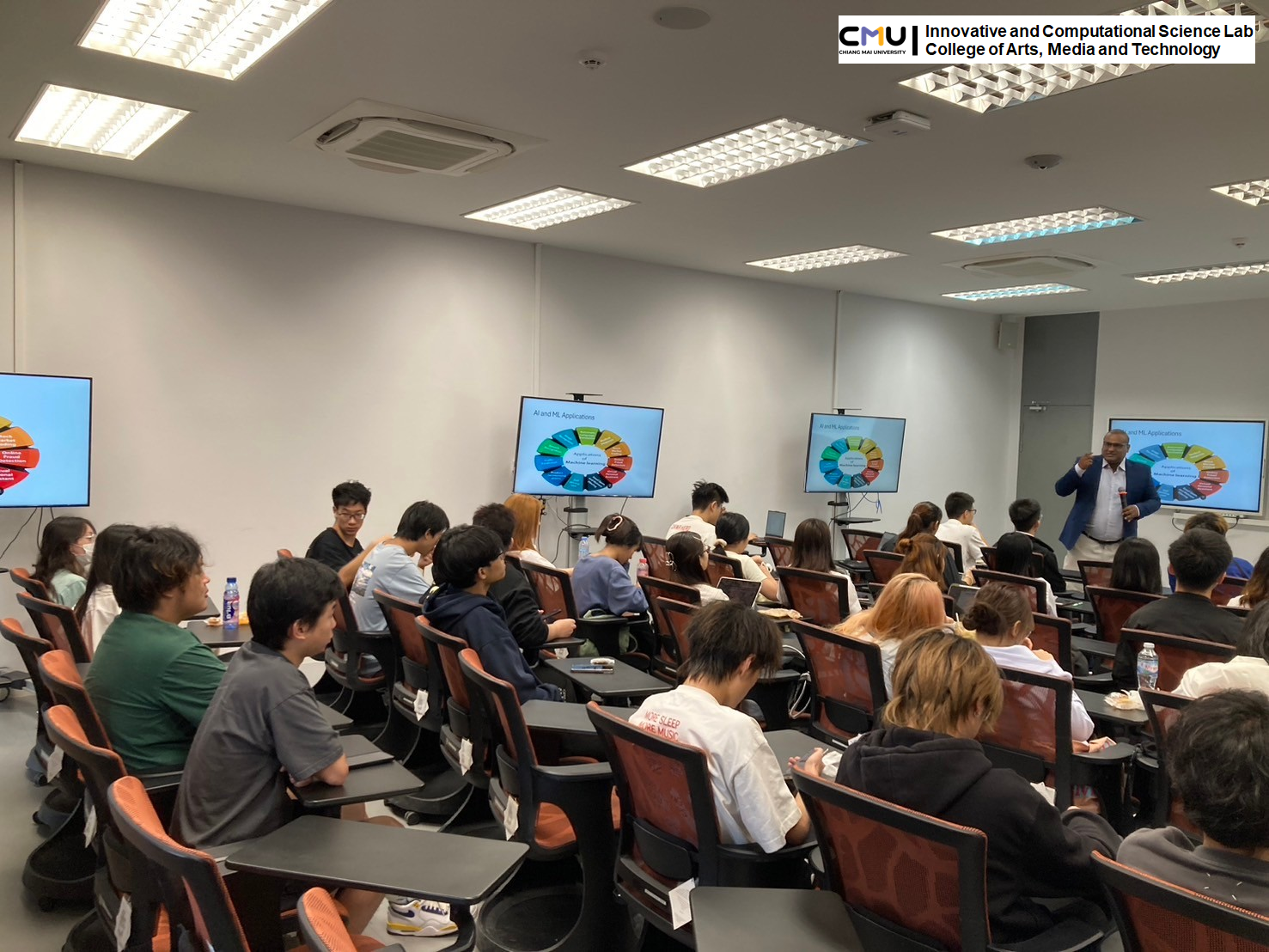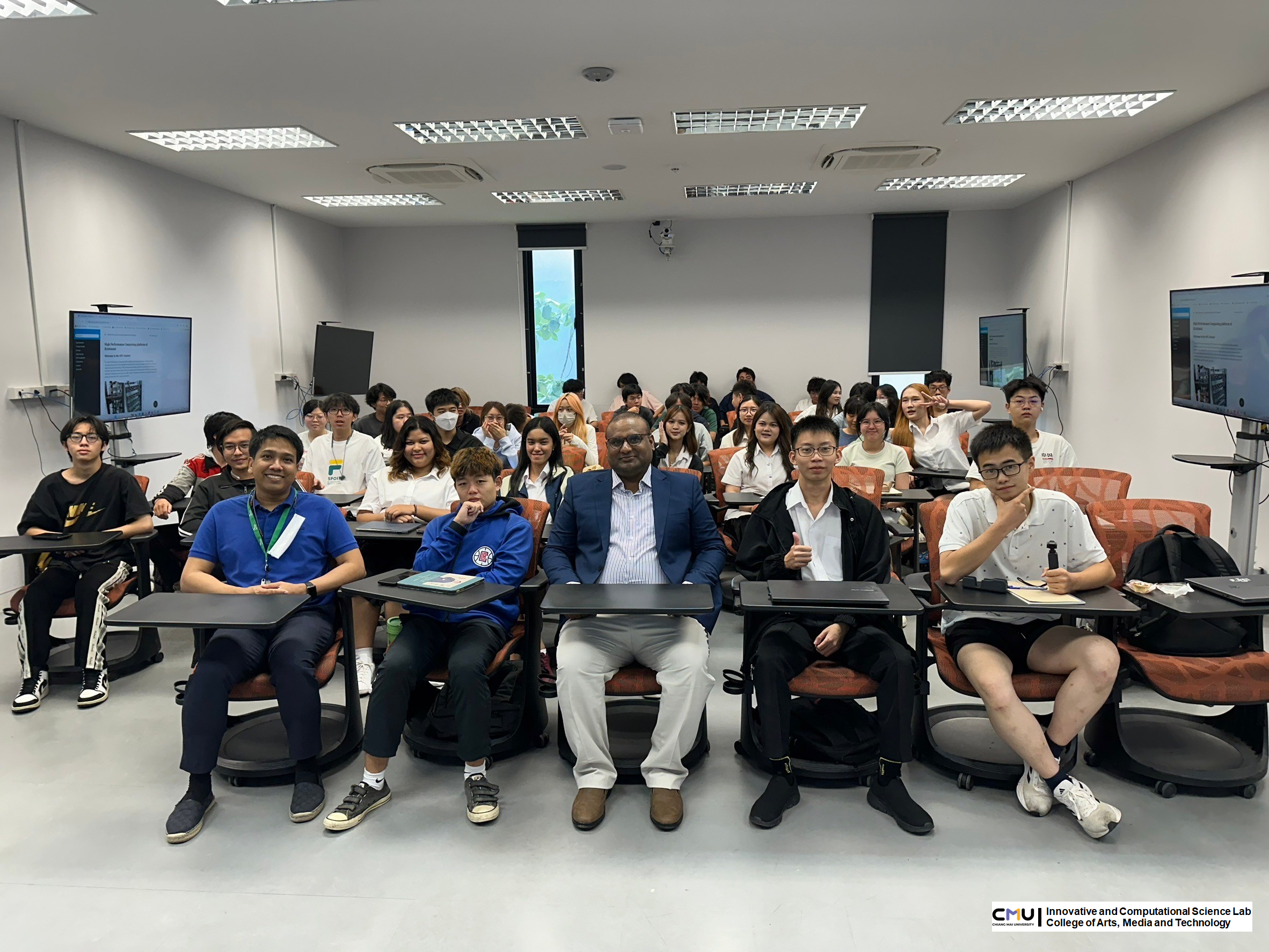
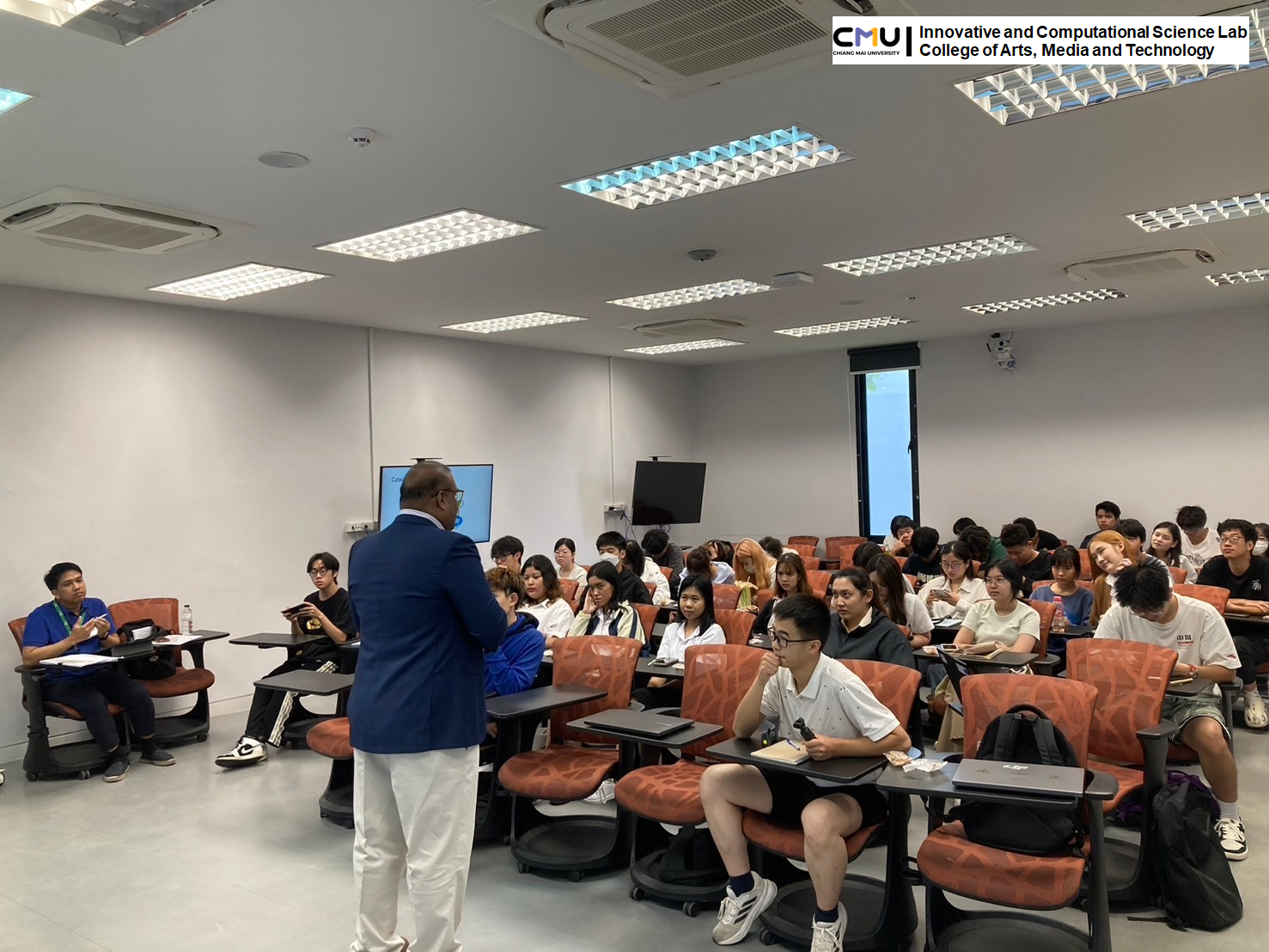
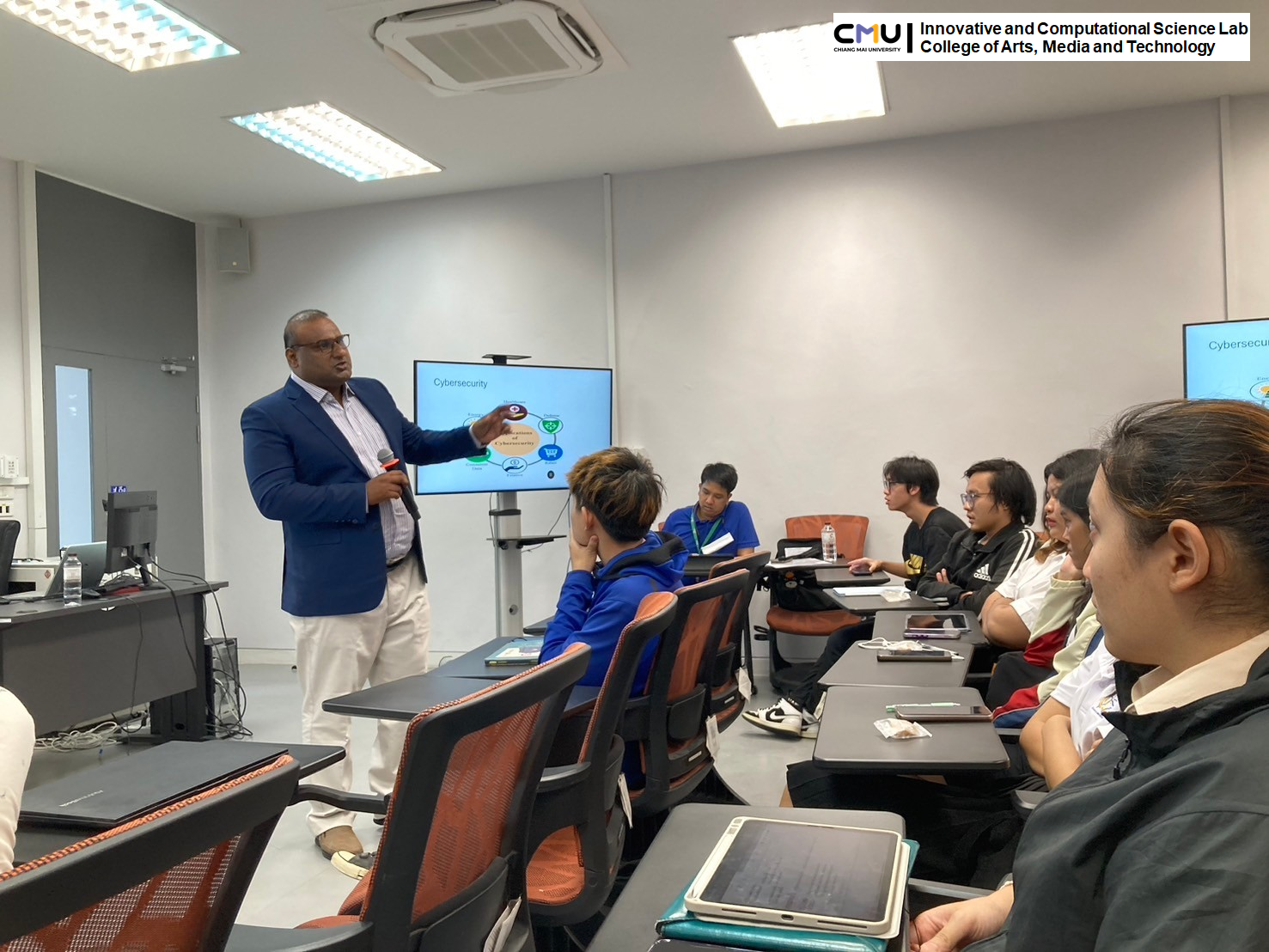
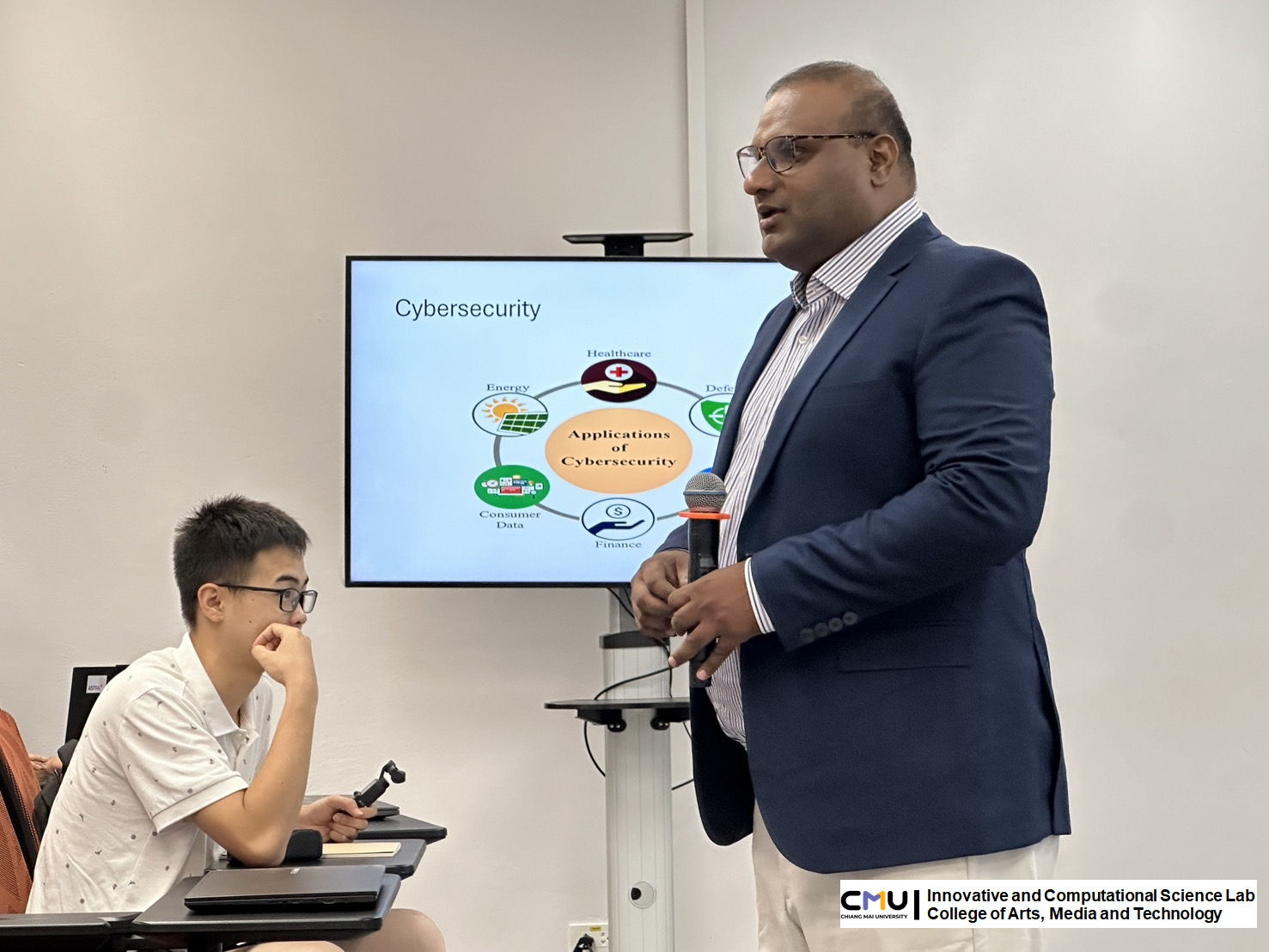
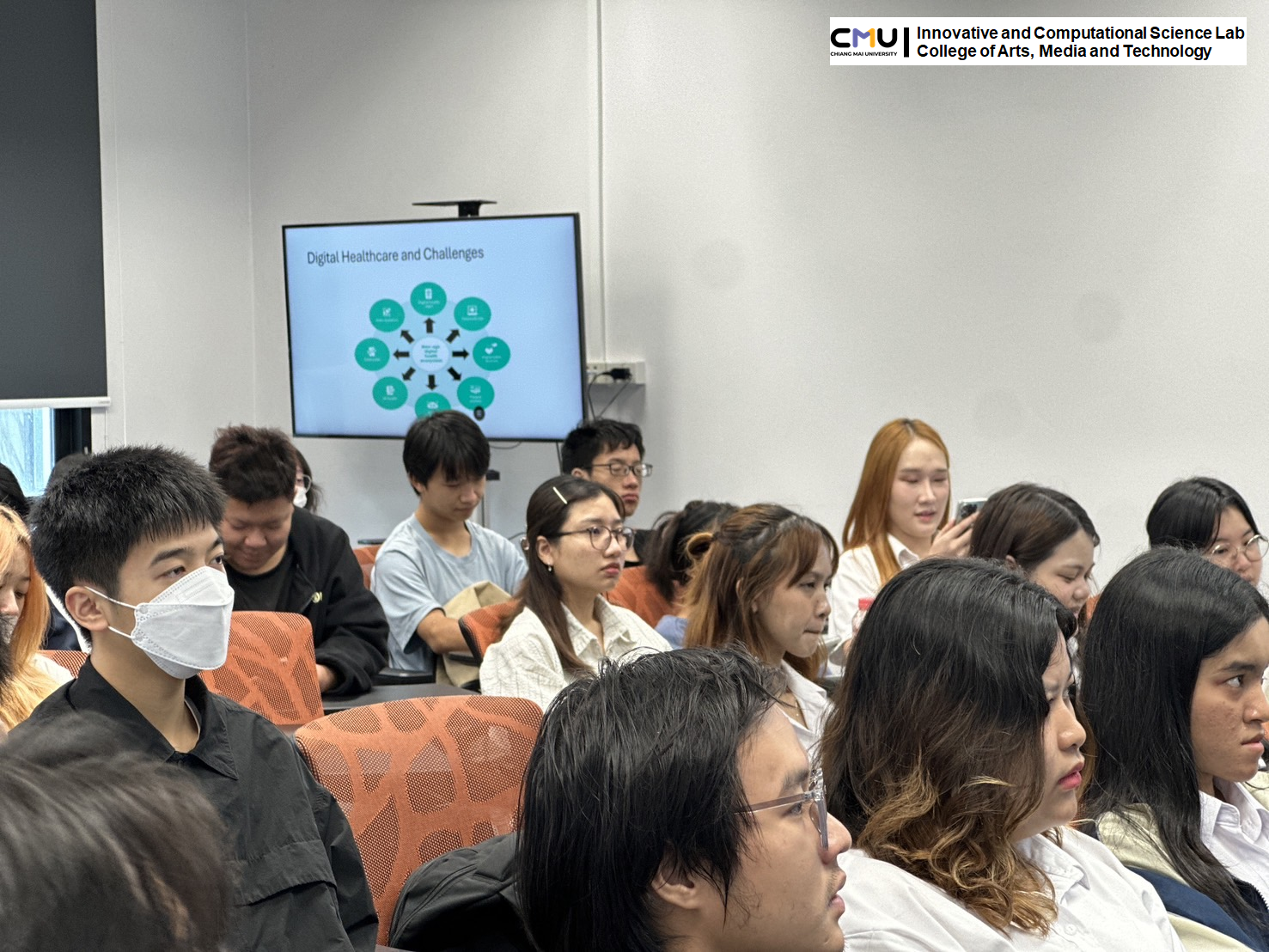
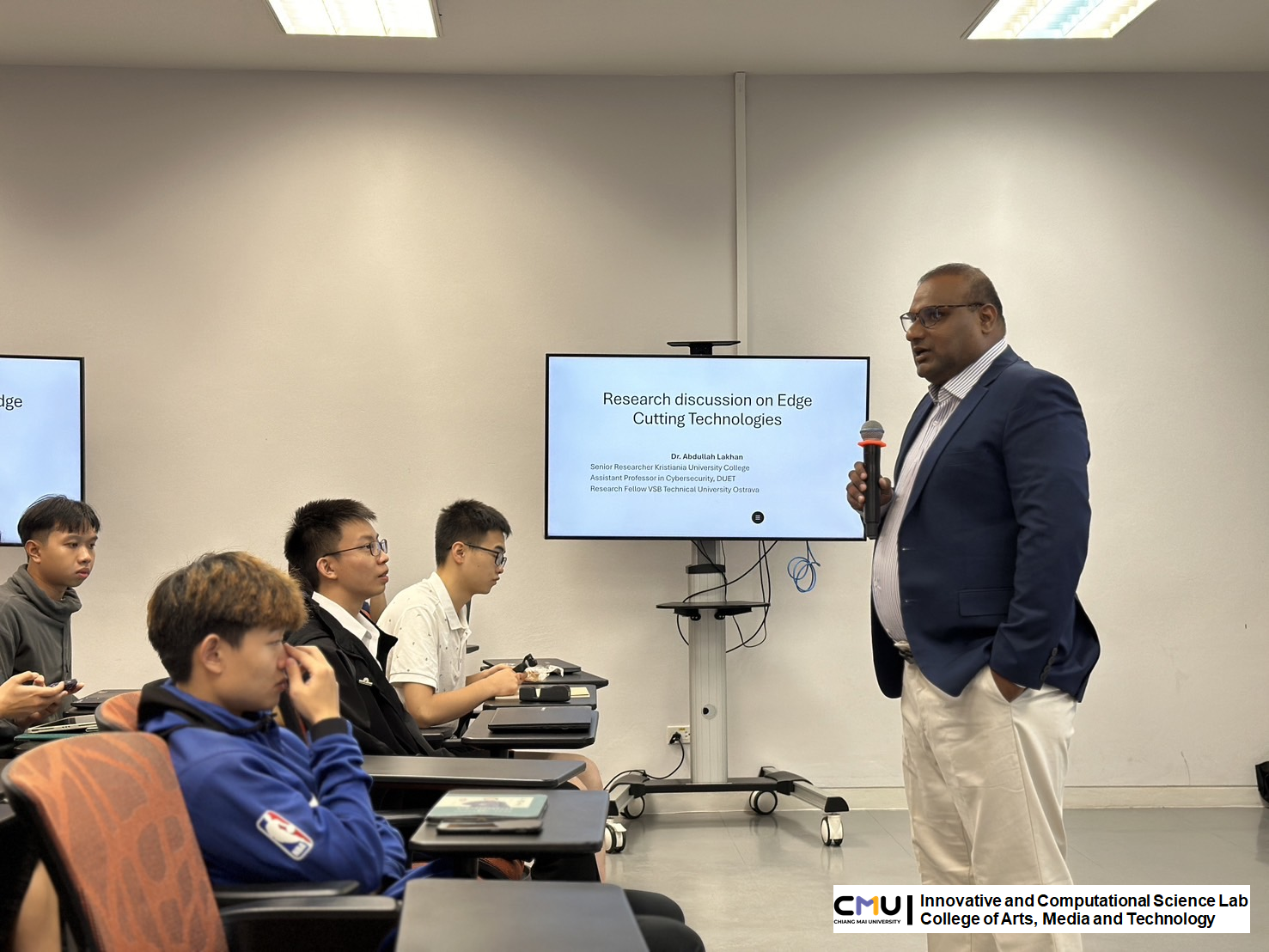
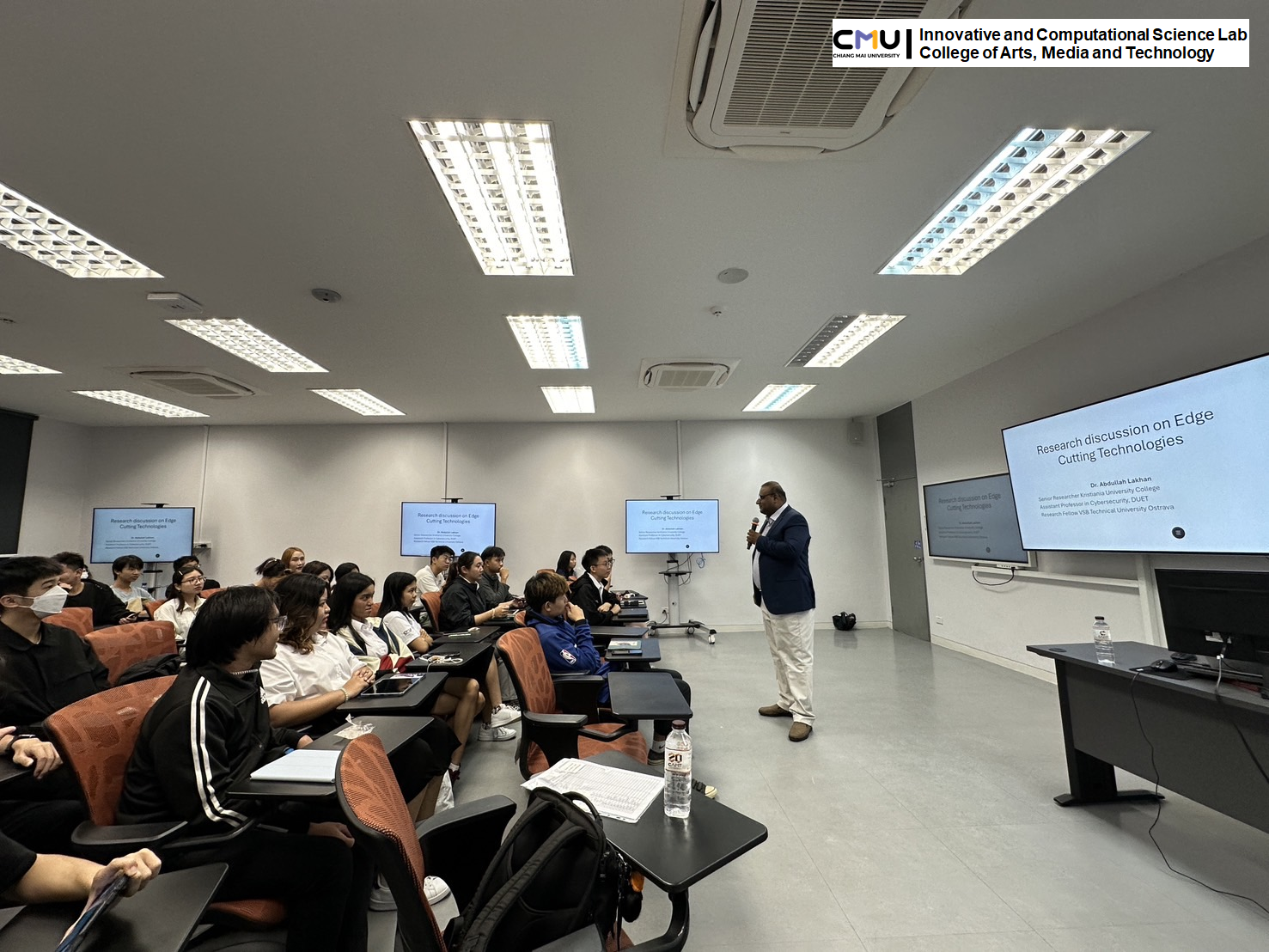
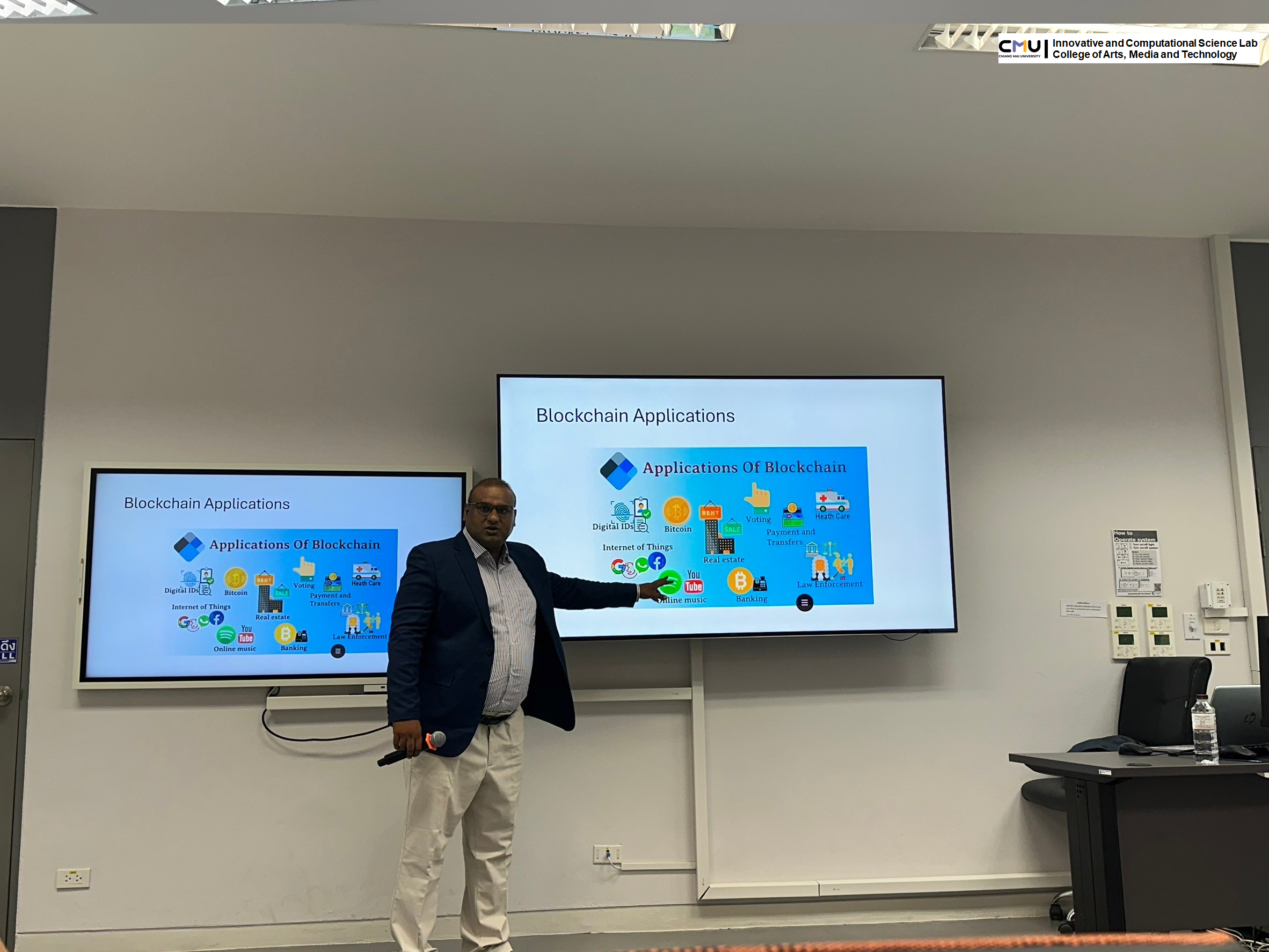
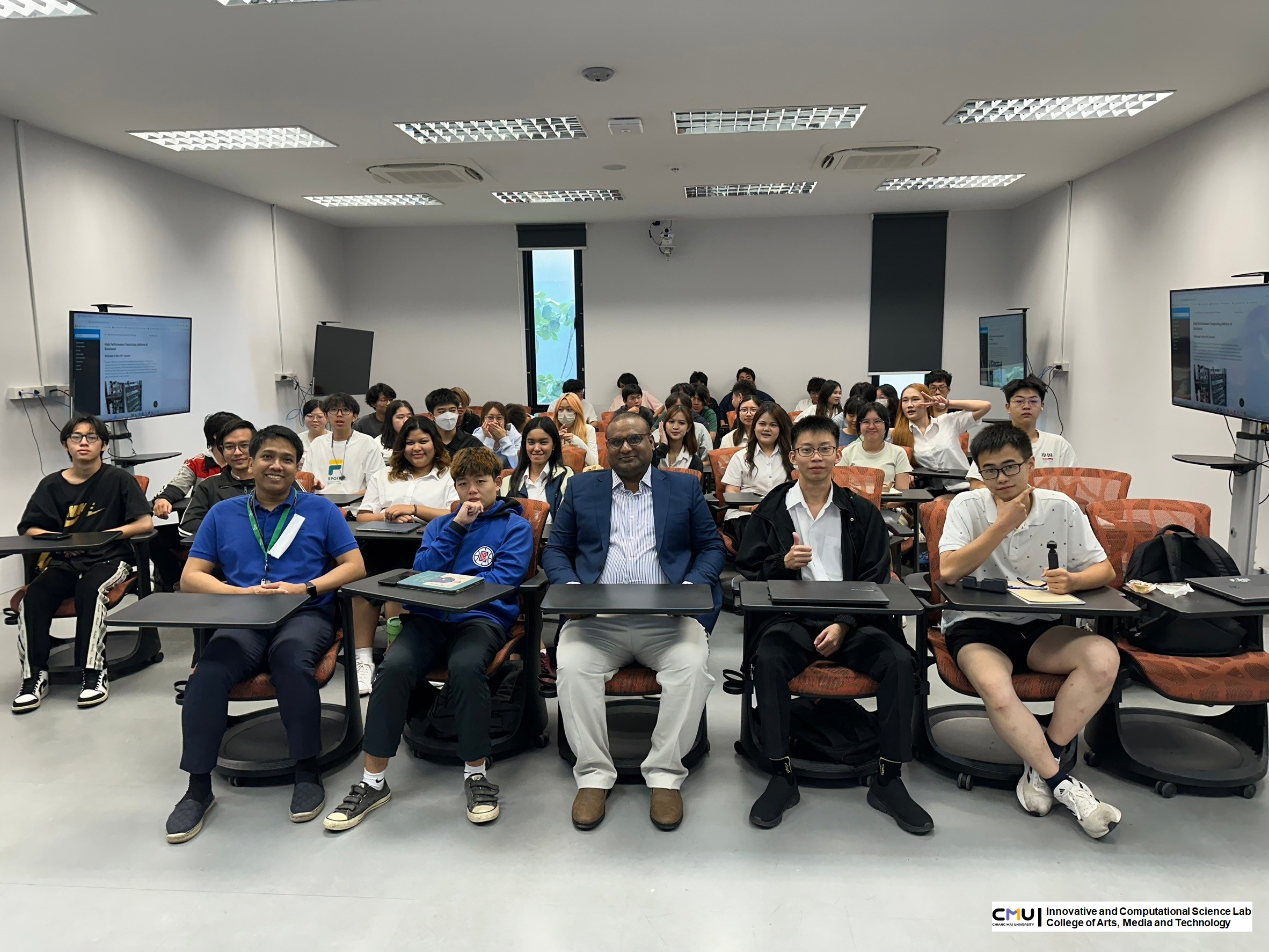
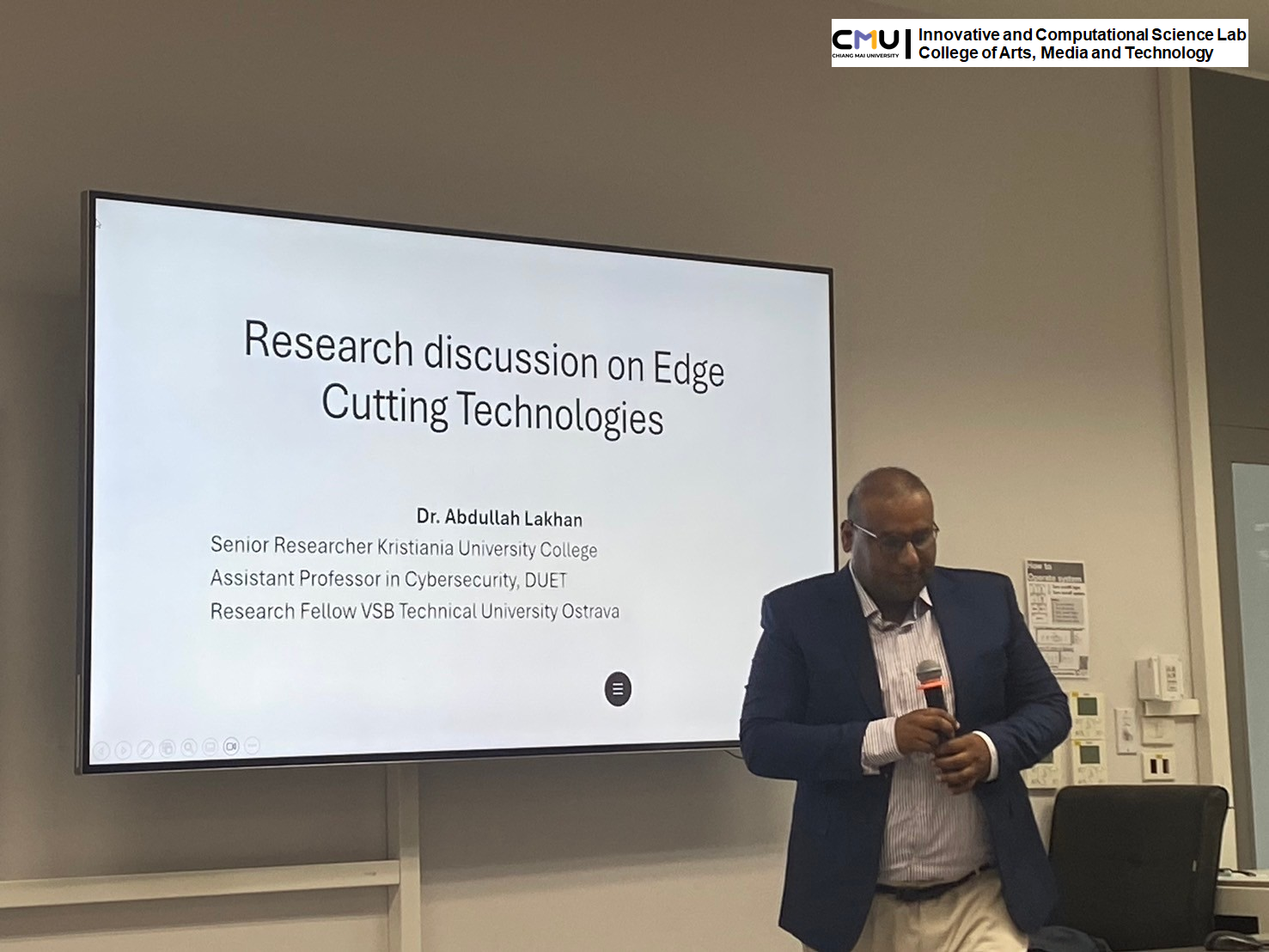
On August 27, 2024, Dr. Abdullah Raza Lakhan, a senior researcher from Kristiania University College, delivered a special seminar to students and faculty at Chiang Mai University. The seminar, titled “Beyond Horizons: Exploring New Trends in AI and Computing Technologies,” was attended by both undergraduate and postgraduate students, as well as researchers and faculty members interested in the latest advancements in AI and computing.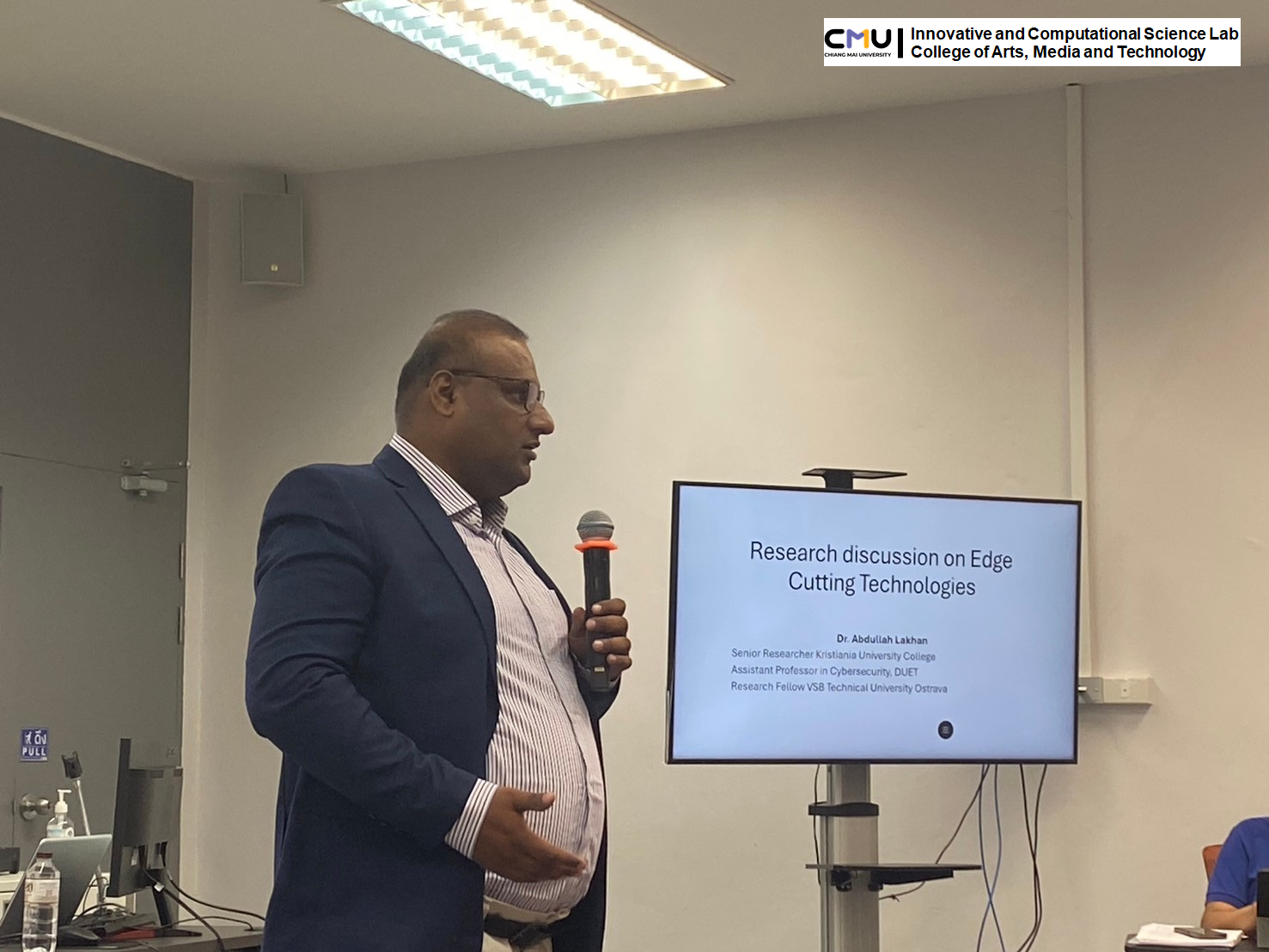
- Generative AI and Foundation Models: The rise of generative AI models, such as GPT and DALL-E, is transforming content creation, design, and even coding. These models are foundational for applications like chatbots, creative tools, and automated code generation.
- AI in Edge Computing: AI-powered edge devices are becoming more prevalent, allowing real-time data processing and decision-making closer to the data source. This trend is crucial in applications such as autonomous vehicles, IoT devices, and smart cities.
- Quantum Computing: While still in its early stages, quantum computing holds the promise of revolutionizing computation by solving problems that are infeasible for classical computers. Research is ongoing into how AI can leverage quantum computing for more efficient algorithms.
- Ethical AI and Responsible AI: As AI becomes more integrated into society, there is growing emphasis on developing ethical guidelines, ensuring fairness, transparency, and accountability in AI systems. Regulations and standards for AI are also gaining momentum.
- AI-Driven Healthcare and Precision Medicine: AI is being increasingly used for personalized treatment plans, drug discovery, and early diagnosis. Innovations in this area are rapidly shaping the future of healthcare.
- AI-Augmented Software Development: Tools that assist in writing, testing, and debugging code using AI are becoming more sophisticated. This trend is streamlining the software development lifecycle and enabling more efficient development practices.
- AI and Climate Change: AI is being applied to address environmental challenges, including optimizing energy consumption, predicting climate patterns, and managing resources more effectively.
- Human-AI Collaboration: There is a shift toward designing AI systems that work seamlessly alongside humans, enhancing productivity while allowing for intuitive interaction. This trend emphasizes AI as an enabler rather than a replacement for human decision-making.
- Advanced Natural Language Processing (NLP): NLP technologies continue to evolve, making AI systems more capable of understanding and generating human language. Applications range from conversational agents to more context-aware content generation.
- AI for Cybersecurity: AI is being integrated into cybersecurity solutions to detect and mitigate threats in real-time, improving the resilience of digital infrastructures.
Thus, In today’s fast-changing world, both companies and students need to constantly adjust to stay relevant and competitive, especially in areas like technology, AI, and computing. Innovation is happening faster than ever, with new tools and methods appearing quickly. For companies, adapting means staying ahead of rivals, improving how they work, and meeting market needs. If businesses don’t keep up with new trends, they risk falling behind, losing customers, and becoming outdated.
For students, it’s important to match their skills with what employers want to boost their chances of getting a job. The skills needed today might not be useful tomorrow, making it vital to keep learning. Also, understanding the latest trends helps both companies and students find new opportunities, whether in business, research, or careers. In a world driven by AI and digital change, staying flexible and informed is key to success. Adapting also encourages new ideas, allowing both people and organizations to make a positive impact on society and the economy. By regularly updating what they know, companies and students can stay ready and equipped for the challenges and opportunities that lie ahead.